What has happened in 2025?
2025. 07. 14.
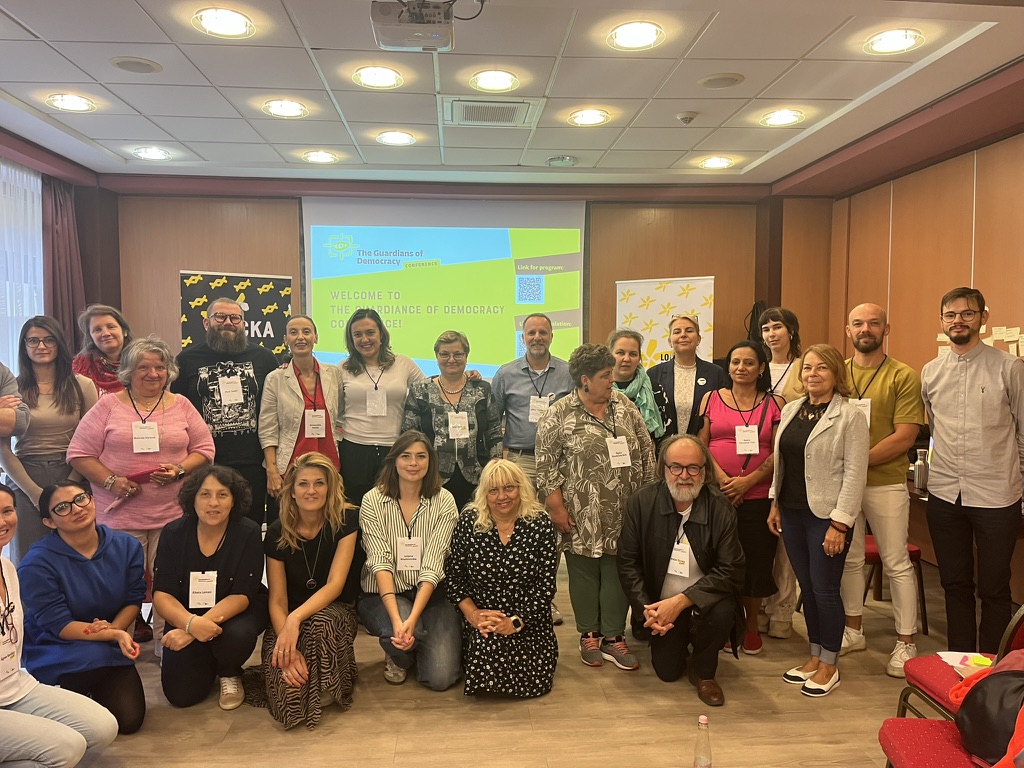
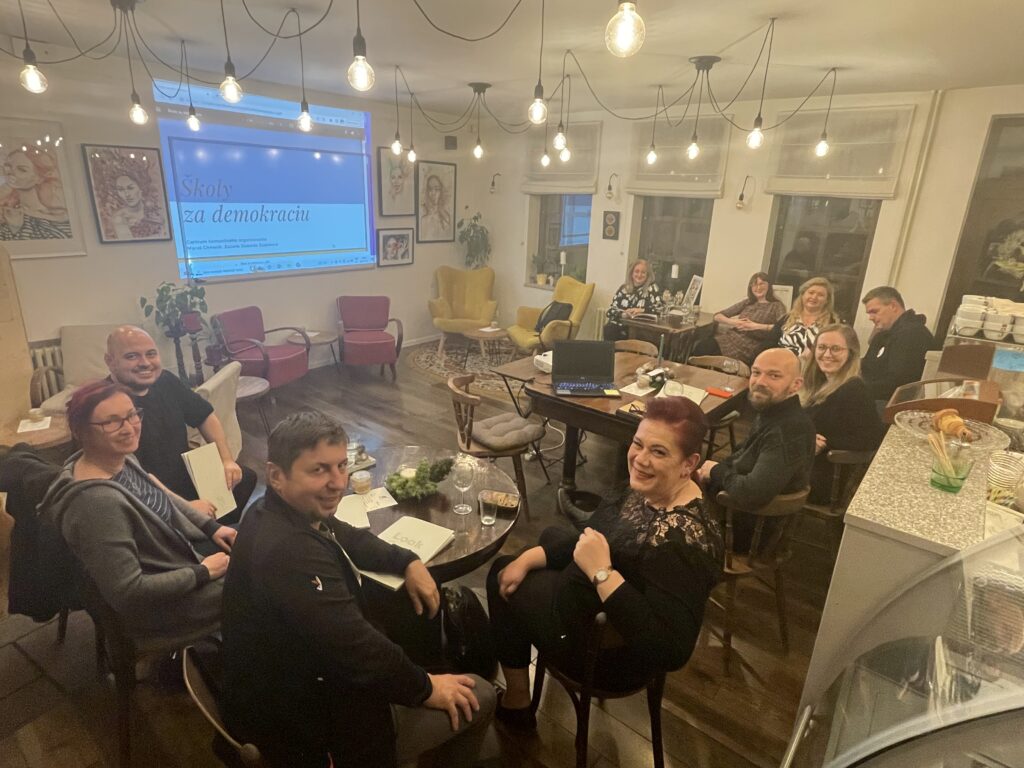
The first half of 2025 was both quite stressful and busy for the Local Democracy Hub. The havoc caused by USAid’s axing did not leave us unaffected, but we nevertheless managed to reorganise ourselves and continue with the program!
In January, CCF issued a call for application for Local Democracy Hubs – we expected local NGOs and municipal representatives to apply together, with clearly articulated issues and goals achievable within the timeframe of the project. In total, we received 15 responses, which shows a significant increase from our previous attempt – and most importantly, 12 of the applicants were from outside of Budapest!
Following an evaluation process, we selected 7+1 applications to go forward with. Our criteria were whether the issue chosen was concrete/delineated enough, and whether it could be solved on a local level employing participatory tools. Amongst the selected were:
- Szeged – making the city’s most frequented streets wheelchair- and baby stroller-friendy.
- Budapest, XVth district – creating a Citizens’ Council to advise the Municipal Council
- Érd – putting a stop to illegal waste dumping
- Fót – creating a local bus line
- Gyöngyösoroszi – drawing up a local tourism plan
- Diósd – establishment of a smart zebra crossing on an extremely dangerous local highway
- Budapest, VIIth district – fighting against extreme air traffic above the area
- Budapest, XIIth district – establishing a Citizens’ Participation Office within the municipality.
Our concept was that for the 8 participants we would offer an intense training curriculum and mentoring, and the group would meet every month in a joint workshop. For those applicants we have not selected, we would offer every second month to participate in an open workshop, where they would receive knowledge and experience enabling them to narrow down their issues and perhaps eventually apply for the next round of Local Democracy initiative.
On the 27th of February we organised our workshop with the participants in this spirit.
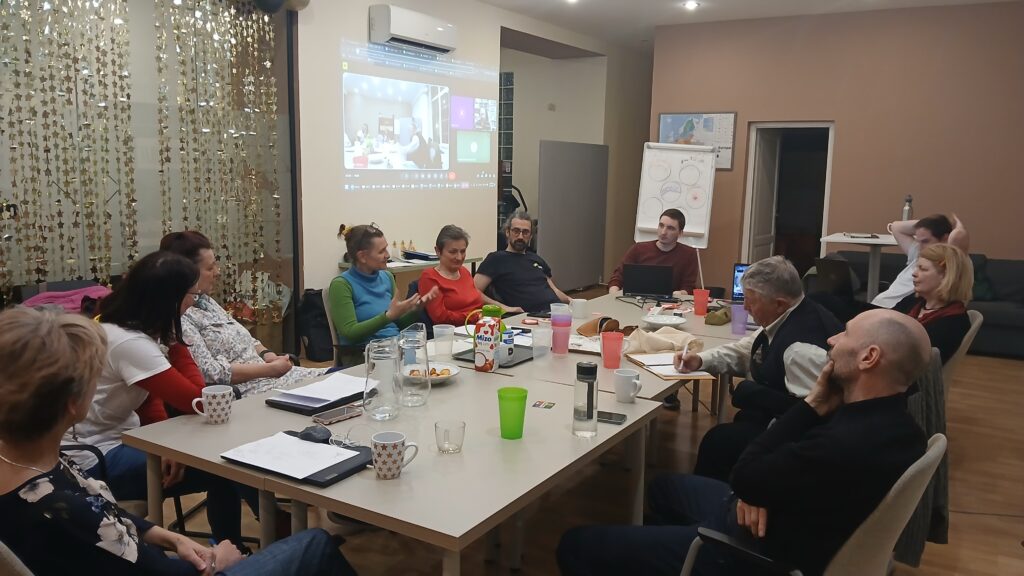
The topic of the workshop was the participating municipalities’ statutes, the rules of procedure, and municipal regulations. This specific body of regulations governs the operation and decision-making of a municipality, and are the ideal starting point for an NGO to assess their options of impacting the municipality, as well as taking stock of the already existing venues of participatory decision-making.
Participants were provided guidelines for reviewing their rules of procedure, and assess what tools they already have to move their issues forward, and what changes ought to be made to make the rules more open to citizen participation. These they presented to each other asking for and offering comments.
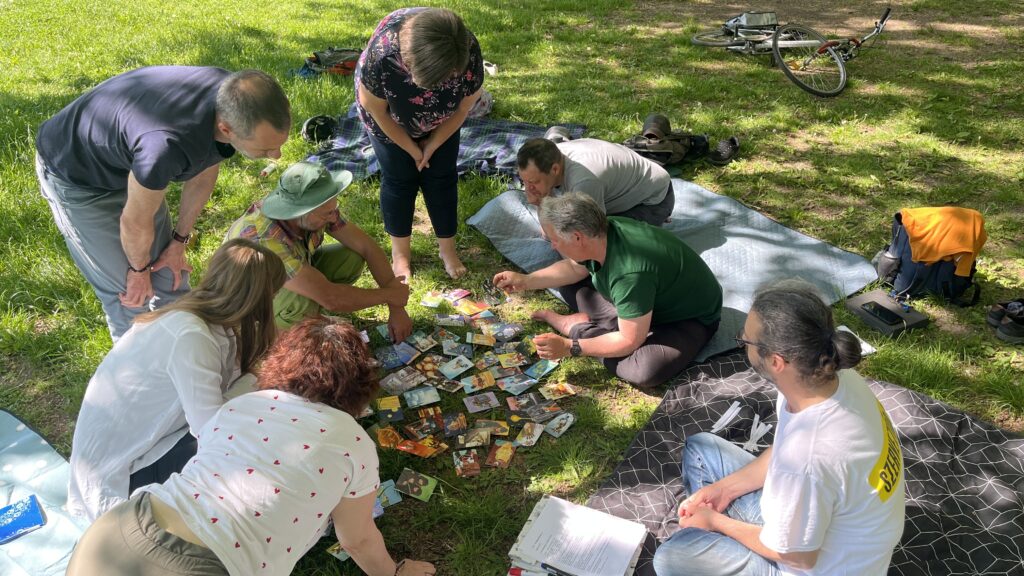
In the next section, participants were asked to create a 1-year strategy using visual tools to achieving their issues, and what participatory tools they would use in the execution of their strategy.
The workshop received very positive feedback, with participants writing that out choice of starting with the rules of procedure were an excellent starting point and very helpful in framing their planned actions.
Examples of one-year strategies:


In April our next workshop was held together with members of the project Civil Map, run by Ökotárs. We explored synergies between the projects, and venues of cooperation amongst the NGOs and locales of the two programs. Participants were asked to “peer SWOT review” each others’ strategies in 1-strong small groups, where one person presented their case, another analysed risks and weaknessed, the third pointed out strenghts and opportunities, and the final person taking notes – after which roles were rotated.
Our participants were thrilled by this peer SWOT review, which provided them excellent insights and ideas into their strategies. Many had never previously done any structured review of their plans – and in addition we provided them with an important and versatile tool that could be used time and again in their proceedings.
The May and June workshops focused on contextualising the participants’ issues, and reflecting on their motivations. Moving beyond the perennial question of the dynamically shifting relationship between elected NGO local representatives and their delegating organisations, we steered the participants’ gaze back to the fundamental question of democracy: how they are shifting power through their actions, how they can make their campaign more inclusive and participatory, and they can build amongst themselves a network of activists and activist organisations that can stem the tide of authoritarianism. We discussed best practices, such as the 2019 Józsefváros municipal elections campaign, the STOP Dolomit activism in Csobánka, and the Public Life Fora in Szentendre.


What has been going on Slovakia and Poland?
CKO in Banska Bystrica and Zvolen are working on local activism, electoral and democratic participation, social justice and operate as a watchdog organisation. They are also staunch supporters of the democratic operation of the European Union, and work on supporting Ukraine and Ukrainian refugees in Slovakia. The current (but not unexpected) autocratic turn of Fico’s regime has given them ample work, organising demonstrations and mobilising voters on the EU elections on 8 June 2024.


CKO also organises exhibitions, film screenings, and the annual human rights festival, L’udkost. In February they screened a movie commemorating the journalist Ján Kuciak and his partner, Martina Kusnírova, who were murdered in 2018 while investigating tax fraud cases of several businessmen with connections to top-level Slovak politicians. In spring CKO organised many events showcasing the Ukrainian war and the lot of refugees from the country, including exhbitions of photos taken in the occupied territories. CKO is very busy working on the preparations for this year’s L’udkost, which take place in August in Zvolen. All the while they continue working with Roma communities and capacity building to expand CKO’s operations to other regions in the country.


Fundacja Rzecz Społeczna, which is mainly active in the Silesian region of Poland, are working first and foremost on climate justice, protecting biodiversity, promoting urban sustainability, and also electoral mobilisation. They organise climate-awarness hikes (for instance in Murkowcki and Katowice-Giszowiec), cooperate with local authorities and NGOs to plan urban green spaces, and hold trainings and workshop for other CSOs for capacity building and climate adaptation. They have been driving a targeted campaign for regreening Silesia, the most industry-affected region in Poland. Through coalition-building with local organisations, they have organised numerous demonstrations, the biggest of which was the Silesian Nature March with hundreds of participants. They also actively represent the issue on municipal and governmental fora, public hearings, and other official meetings. They are helping local activists to organise five local campaigns and make at least five local stories heard and acted upon – the ultimate aim is to create a regional network of at least 50 NGOs, all working on climate justice in Silesia.